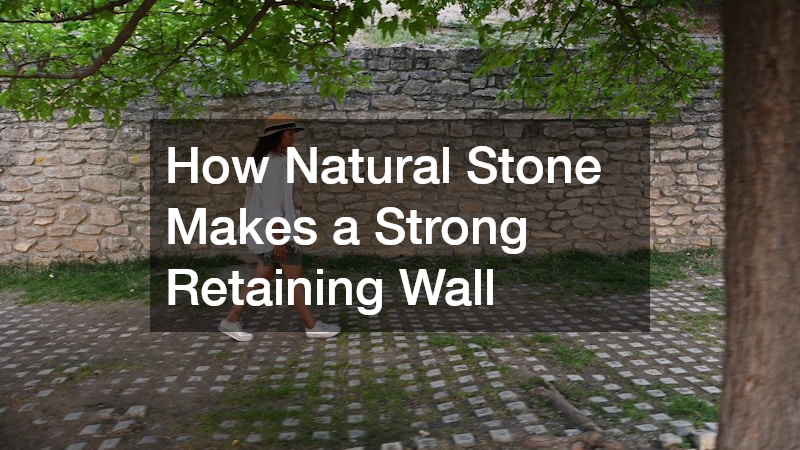

Retaining walls play a critical role in both residential and commercial landscapes. They prevent soil erosion, manage water runoff, create usable outdoor spaces, and add visual structure to sloped properties. While there are many materials available for building retaining walls—such as concrete blocks, timber, and poured concrete—natural stone remains one of the most reliable and attractive options.
Using natural stone offers a combination of strength, durability, and timeless beauty that few other materials can match. When sourced from a reputable stone supplier, high-quality stone can provide decades of structural support with minimal maintenance. In this article, we will explore the benefits of natural stone, examine how it enhances structural strength, and discuss the best types of stone for building a durable and visually appealing retaining wall.
What Are the Benefits of Using Natural Stone for Retaining Walls?
One of the primary reasons homeowners and contractors choose natural stone is its exceptional durability. Unlike wood, which can rot, or manufactured blocks that may crack over time, natural stone is formed under intense geological pressure. This natural formation process makes it inherently strong and long-lasting. When installed correctly, a natural stone retaining wall can last for generations. High-quality materials sourced from a trusted stone supplier ensure consistent density and structural performance. Granite, limestone, and sandstone—discussed later in this article—are particularly known for their resilience under pressure and exposure to the elements. The long lifespan of natural stone also makes it a cost-effective choice over time. Although the upfront investment may be higher than some alternatives, the reduced need for repairs and replacements can lead to significant savings.
Natural stone offers unmatched visual appeal. Each piece features unique colors, textures, and patterns that blend seamlessly with outdoor environments. Whether you prefer a rustic, traditional look or a more refined, modern design, natural stone can complement a wide range of architectural styles. Working with an experienced stone supplier allows homeowners to select materials that match their design goals. From earthy browns and grays to warm beiges and subtle blues, the natural variations in stone create a rich, organic appearance that manufactured materials often struggle to replicate. Additionally, natural stone ages gracefully. Rather than deteriorating in appearance, it often develops character over time, enhancing the landscape’s overall charm.
Natural stone is an environmentally friendly building material. It requires minimal processing compared to concrete or synthetic alternatives, which often involve energy-intensive manufacturing. As a naturally occurring resource, stone does not release harmful chemicals into the soil or surrounding environment. Because it is durable and long-lasting, natural stone reduces the need for frequent replacements, minimizing material waste. Many homeowners also choose to source stone locally through a regional stone supplier, which can help lower transportation-related emissions.
How Does Natural Stone Contribute to the Strength of Retaining Walls?
A retaining wall must withstand significant lateral pressure from soil and water. Natural stone’s density and weight contribute to its exceptional structural integrity. The mass of each stone helps counteract the force exerted by the soil behind the wall, making it inherently stable. Dry-stacked stone walls rely on the careful placement and interlocking of stones to create stability, while mortared stone walls use bonding agents for additional reinforcement. In both cases, the natural weight and friction between stones play a vital role in maintaining structural strength. Selecting properly cut and graded stone from a reliable stone supplier ensures uniformity and helps prevent weak points in the wall’s construction.
Natural stone has impressive load-bearing capabilities, which are essential for retaining walls supporting heavy soil, landscaping features, or even driveways and patios. Granite, for example, is known for its exceptional compressive strength, allowing it to handle substantial pressure without cracking. The inherent strength of natural stone reduces the likelihood of shifting or bowing over time. When installed with proper drainage systems and foundational support, a stone retaining wall can maintain its integrity even under heavy loads.
Retaining walls are constantly exposed to the elements, including rain, wind, freezing temperatures, and intense sunlight. Natural stone is highly resistant to weather-related damage. It does not warp, rust, or deteriorate easily when exposed to moisture. Certain stones, such as granite and dense limestone, perform exceptionally well in freeze-thaw cycles, making them suitable for regions with harsh winters. By sourcing high-quality, weather-resistant materials from an experienced stone supplier, homeowners can ensure their retaining wall stands strong against seasonal changes.
What Types of Natural Stone Are Best for Retaining Walls?
Granite is one of the most durable natural stones available. Known for its hardness and resistance to wear, it is an excellent choice for retaining walls that must support heavy loads. Granite’s low porosity also makes it resistant to water infiltration and frost damage. Its range of colors—from light grays to darker speckled tones—adds versatility in design. Granite is often recommended for large-scale or structural retaining walls due to its superior strength.
Limestone offers a balance between strength and workability. It is easier to cut and shape than granite, making it suitable for projects requiring more precise stone placement. Limestone’s natural, neutral tones complement a variety of landscape styles. While slightly more porous than granite, high-quality limestone sourced from a reputable stone supplier can perform exceptionally well when properly sealed and installed.
Sandstone is valued for its warm colors and textured surface. It creates a softer, more natural appearance that blends beautifully into garden settings. Although it may not be as dense as granite, properly selected sandstone can still provide reliable structural support for moderate-height retaining walls. Choosing durable, well-compacted sandstone from an established stone supplier ensures better long-term performance and weather resistance.
Natural stone is a durable, attractive, and environmentally responsible choice for retaining walls. Its strength, load-bearing capacity, and resistance to harsh weather ensure long-term performance, while its timeless beauty enhances any landscape. By working with a reputable stone supplier, homeowners can secure high-quality materials that deliver both structural reliability and lasting visual appeal.